Top Tips for Selecting Luxury Outdoor Lighting

A Guide For DesignersOver the past few years, the boundary between indoor and outdoor spaces has become increasingly fluid, especially for luxury homes and other high-end environments. Exterior lighting is no longer an afterthought. It plays a key role in setting the mood, highlighting architectural features, and continuing the story of a custom-designed interior into the outdoor areas. This guide offers top tips for selecting luxury outdoor lighting that meets the exacting standards of upscale properties.
Luxury Outdoor Lighting Blends Function and AestheticsFor luxury properties, sophisticated outdoor lighting goes beyond basic functionality, offering a powerful blend of aesthetic and practical advantages that resonate deeply with discerning clientele:
Elevates Perceived Value: Well-planned lighting accentuates architectural details, material richness, and landscape artistry, dramatically increasing the property’s actual and perceived value.
Creates Curated Experiences: Lighting delineates and transforms outdoor areas, such as terraces, gardens and water features, into enchanting, functional extensions of the interior living space, perfect for sophisticated entertaining or serene private retreats.
Welcomes Guests Safely: Good lighting provides a sense of security and elegance. It safely guides residents and guests, creating a welcoming atmosphere rather than one that feels like harsh surveillance.
Highlights Special Features: The beauty and craftsmanship of custom water installations, prized sculptures, unique trees or intricate stonework are celebrated through carefully directed illumination.
Quietly Sets a Mood: Light silently sets the mood. From a grand entrance’s warm, inviting glow to a dining terrace’s subtle, romantic shimmer, lighting choreographs the emotional experience of the space.
 Tips for Specifying Durable and Distinctive Outdoor Lighting
The external environment demands uncompromising performance from lighting. Here are some technical specifications tips for selecting outdoor luminaires for luxury projects.
Verify Environmental Ratings (Location Listings):
- Damp-Rated: Essential for covered, protected areas such as porte-cochères, verandas and patios, where fixtures are shielded from direct precipitation but may encounter ambient moisture and condensation.
- Wet-Rated: Non-negotiable for luminaires exposed directly to the elements, such as rain, snow or irrigation spray. This includes wall-mounted fixtures on exposed facades, post lights, landscape lighting and any luminaire in an uncovered setting. Make sure to verify the third-party certification (such as UL) of the Wet Location rating to ensure safety, longevity and code compliance.
Select Lighting Made from Quality Materials and Finishes: The materials chosen for outdoor fixtures must be able to endure harsh coastal or extreme weather environments. Look for:
- Marine-Grade Stainless Steel: Offers superior corrosion resistance, particularly in salty environments, while maintaining a sleek, contemporary aesthetic.
- Die-Cast Aluminum: When finished with powder coating paint, aluminum provides corrosion-resistant performance and stylistic versatility.

- Solid Brass and Bronze: Prized for their natural resilience and ability to develop a distinguished patina over time, adding character and depth.
- Glass and Resilient Diffusers: Look for hand-blown, seeded, or optic glass that adds character while beautifully diffusing light. Polycarbonate or acrylic lenses should be UV-stabilized to prevent yellowing and degradation.
- Sealing and Gasketing: Precision engineering with high-quality silicone gaskets and sealed compartments is crucial for protecting internal optics and electrical components from moisture and foreign particles entering the fixture.
How to Choose Outdoor Decorative Lights for Luxury Homes
When selecting outdoor fixtures, choose lights that complement both the architectural style and the functional requirements of each outdoor area.
Wall Lights
Wall sconces and lanterns are ideal for defining entryways, highlighting building facades, illuminating pathways and adding depth to outdoor rooms. Their styling can range from large lanterns to minimalist architectural sconces offering uplight, downlight or a combination of grazing and washing effects.

Flush Mounts and Semi-Flush Mount Ceiling Lights
Ceiling Lights provide ambient lighting in covered outdoor spaces such as porticos, entry vestibules and intimate covered patios. Their design can vary from discreet, integrated fixtures to subtly decorative pieces that complement overhead architectural details.
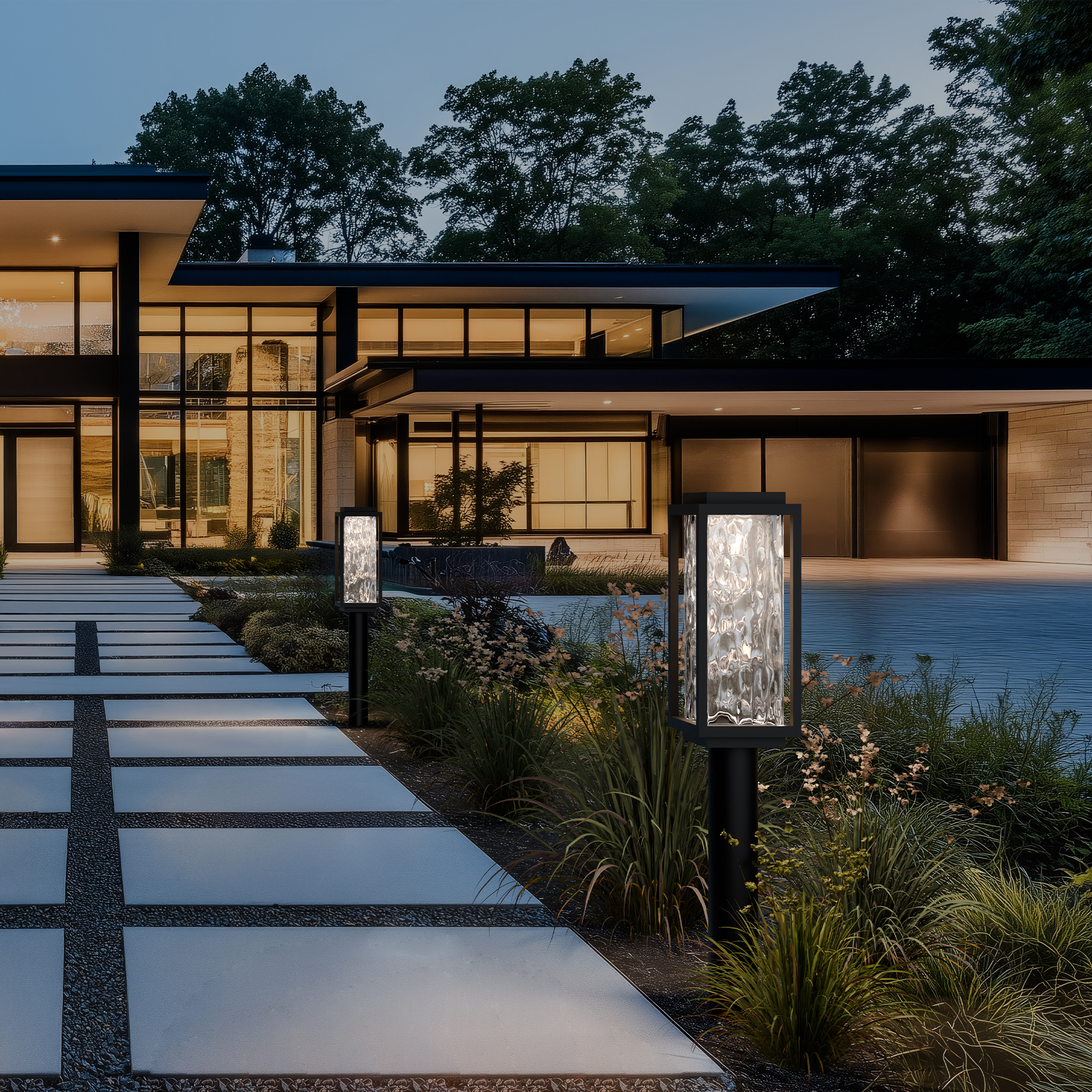
Post and Pier Mount Lights
Post lights are excellent for lining driveways, illuminating extensive pathways, defining garden perimeters, or crowning stately gate posts and masonry columns. While often echoing classical designs, they are increasingly available in contemporary and transitional styles.
Outdoor-Rated Ceiling Fans
Smart ceiling fans are ideal for enhancing comfort and providing ambient light in covered outdoor living rooms, lanais, and expansive verandas. These fans are available in a vast array of designs, from tropical-inspired to sleekly modern, with integrated LED light sources and other smart features that can be app-controlled.
Outdoor Pendant Lights
Outdoor Pendants create a focal point and provide intimate illumination over dining settings and seating areas within covered patios, pergolas, or gazebos, blurring the line between interior and exterior luxury. They offer an opportunity for significant design statements, from rustic chic to modern sculptural forms.
 Guidelines for Size and Placement of Outdoor Lighting
 Wall Lights
For wall lights, the size of the fixture should ideally be about one-quarter to one-third the height of the door it’s next to, especially for prominent entryways. However, always consider the overall look and style of the building’s facade; sometimes, a larger fixture can make a more powerful and intentional statement.
Generally, wall lights are mounted at or slightly above eye level (around 66-72 inches from the finished floor) to prevent glare. For double doors, placing them symmetrically is crucial. For single doors, it’s common to place the light on the side of the door handle; however, the final decision should always prioritize visual balance.
Ceiling Fixtures
The size of ceiling lights should match the perceived size of the space they cover. A large portico can easily support a more substantial fixture than a smaller porch. Typically, these lights are centered to ensure even illumination, with a minimum clearance of 7-8 feet in areas where people walk.
Post Lights
The height of the post and the size of the light fixture on top should look balanced with the surrounding landscape and the architectural features they accompany. Post lights for driveways are often taller and more substantial than those used for pathways. When placing them, consider the desired brightness and the extent to which the light spreads. The goal is to create graceful, overlapping pools of light, avoiding dark spots or an overly bright “runway” effect. Placing them strategically at turns, entrances, or interesting points is key.
Outdoor Pendants and Chandeliers
When hanging over a dining table, a good rule of thumb is for the fixture to be about one-half to three-quarters the width of the table. Install these lights 30-36 inches above a tabletop. In walking areas, they should be at least 7-8 feet high to ensure clear views and comfortable headroom.
Outdoor Ceiling Fans:
Center ceiling fans provide balanced airflow, with blades at least 8-9 feet from the floor for optimal performance and safety and at least 18-24 inches away from any wall. Larger spaces may require multiple fans. Select the fan size (blade span in inches) based on the square footage of the covered area to ensure the best airflow.
Up to 150 sq ft: 42-48 inches
150-225 sq ft: 50-54 inches
225-400 sq ft: 56-60 inches
Over 400 sq ft: 62+ inches or install more than one fan
Lighting Design Tips for Beautiful ExteriorsCreating standout outdoor lighting goes beyond simply selecting fixtures—it’s about designing an immersive experience. Here’s how to approach it with intention:
Use Layered Lighting for Balance
Great outdoor lighting uses layers to build both function and atmosphere:
Ambient Lighting: The base layer that lights up large areas for safety and general visibility (like ceiling lights or post lights).
Task Lighting: Focused lighting for specific uses, such as over an outdoor kitchen, reading nook or dining table.
Accent Lighting: Adds drama and highlights special features, such as architectural details, trees, sculptures or wall textures.
Decorative Lighting: Fixtures that look beautiful on their own—even when turned off—such as sculptural chandeliers or artful sconces.
Complement the Building’s Architecture
Outdoor lights should feel like a natural extension of the home’s style—whether it’s modern, traditional or something in between. Choose finishes and shapes that complement the interior design, so the transition between the inside and outside feels seamless.
Take Advantage of Smart Lighting and Control
Modern lighting offers more than beauty—it brings convenience and control.
Use dimmers to adjust the brightness according to the mood or time of day, creating a range from a soft, ambient glow for evening gatherings to brighter illumination for task-oriented activities. Timers and sensors can automatically turn lights on and off based on sunset or ambient light to maintain ideal visibility. Smart home devices allow for scenes to be programmed and remote control of lights, including on/off and color temperature selection.
Consider Dark Sky Friendly Design
Downward-facing or shielded designs help protect the night sky, reduce light pollution, and support eco-conscious design—an increasingly important part of luxury living.
 Modern Forms: Outdoor Lighting That Makes a Statement
A Modern Forms light fixture or ceiling fan transforms a space—whether it’s a grand entrance or a quiet terrace—into something unforgettable. These aren’t just lights; they’re expressions of refined taste. Here are some ways to elevate design projects with Modern Forms exterior luminaires:
Impressive Entrances: Frame doorways with sparkling sconces to make an unforgettable first impression.
Outdoor Dining and Lounging: A chandelier over a pergola or in a loggia becomes the centerpiece for elegant entertaining.
Poolside Glamour: Add surprise and sophistication to cabanas or pavilions with reflections that dance on the water.
Choosing Modern Forms helps designers bring the drama and beauty of lighting into the open air—offering clients something truly unique and luxurious.